How To Get Your Pool Ready For Summertime in Alabama: A Complete Checklist
Work through these steps in order and your first swim of the year happens on your schedule, not the algae's.
October 20, 2026 · 4 min read
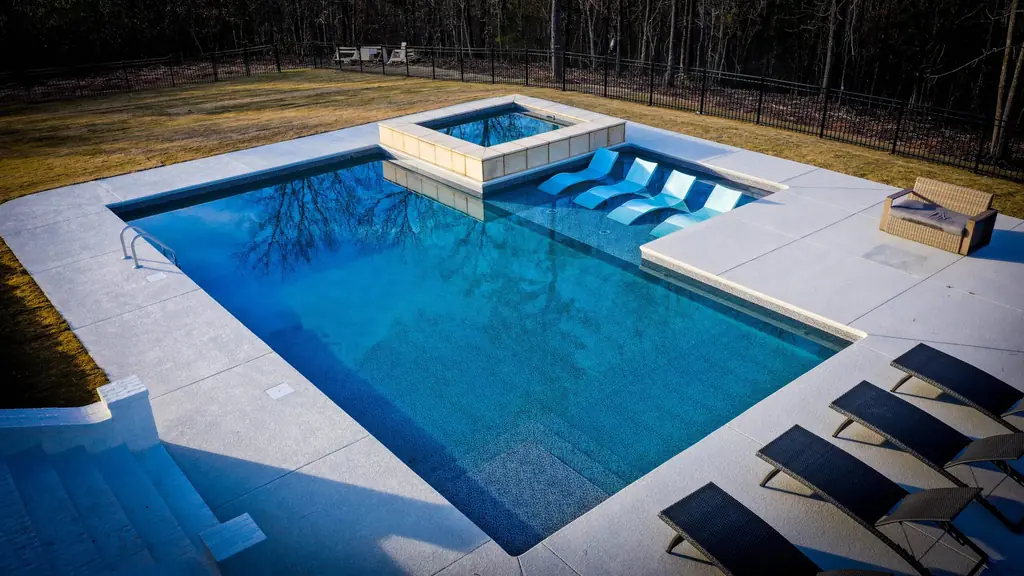
In Alabama, pool season doesn't wait for a date on the calendar. One warm weekend in spring and the kids are asking when they can jump in. If your pool has spent the cooler months under a cover or just sitting there, a little planning now keeps you from a green surprise later. This checklist walks through the work in order, so the first swim of the year happens on your schedule and not the algae's.
Clear the debris and look the pool over
Start with the physical work. If you use a cover, clean it before you pull it off, because standing water and leaf sludge on top will end up in the pool the moment you slide it aside. Pump off the water, sweep the debris away, and fold the cover dry. Alabama springs are heavy on pollen, and it leaves a yellow-green film on the surface and the deck. Net the surface first, then net the bottom if leaves have sunk. Get as much out by hand as you can before you turn on the vacuum, since big debris clogs lines and baskets.
While you're out there, walk the deck and the pool wall. Look at the coping, the ladder, the handrail, and the steps, and check that nothing has loosened. If you have a vinyl liner, look along the waterline and around the skimmers, returns, and steps for new wrinkles, pulled corners, or spots that look faded or thin. Those areas tend to show trouble first. Write down anything odd. A note now makes for a much easier conversation than a leak in July.
Wake up the equipment before you add chemicals
Get the water moving before anything else goes in. Empty the skimmer baskets and the pump basket, then check the pump lid and its seal, the filter, and the fittings for cracks or wear. Open the valves, prime the pump, and let it run. Listen to it. A pump that grinds, squeals, or hums without moving water is telling you something, and a tired motor is far better found in April than on a holiday weekend. Clean or backwash the filter the way your filter type calls for, then watch the pressure gauge and compare it with what you remember from last season.
Circulation matters more than most owners expect. Chemicals only work where the water carries them, and a pump that doesn't run long enough in Alabama heat leaves you chasing cloudy water all summer. Give the system a full day of running before you judge the water. Make sure the returns push water across the pool and the skimmers pull from the surface instead of gulping air.
Test, balance, and shock the water
Test before you add a single thing. A good kit, or a water sample taken to a pool supply store, tells you where you're starting. The main players are sanitizer (usually chlorine), pH, and alkalinity. Alkalinity works as a buffer that keeps pH from swinging, so many pool owners correct it first, then pH, then sanitizer. Adding everything at once usually wastes product. Follow the label, add one chemical at a time with the pump running, and retest after the water has circulated.
If the pool sat for months, expect to shock it. Shock is a heavy dose of oxidizer that clears out what has built up in the water. Do it in the evening, because sunlight breaks chlorine down quickly. Alabama sun and heat use up sanitizer fast, so a pool that tested fine on Friday can read low by Tuesday. That's normal, and it's why steady testing beats a big fix once a month. If the water is already green or cloudy, algaecide and a clarifier can help, but they work alongside good circulation and filtration, not in place of them.
Plan for storms, pollen, and a weekly routine
Summer thunderstorms can drop leaves, dirt, and runoff into the pool in a few minutes. After a big storm, empty the baskets, check the water level, and retest the chemistry, since heavy rain dilutes everything you just balanced. Keep a net and a brush somewhere you can grab them. Pollen and storm season overlap, so plan on skimming more often than you'd like.
Then settle on a rhythm you can keep up all season. A weekly routine that works looks like this:
- Net the top of the water and brush the walls
- Vacuum the pool
- Empty the pump and skimmer baskets
- Backwash the filter when it needs it
- Look over the equipment for leaks, drips, or new noises
- Blow the leaves and grit off the deck
- Test the water and balance the chemicals
If that list looks like a lot to fit around work and weekend ball games, you're not the only one. Mr. Pool runs weekly cleaning plans built around these same steps, with chemicals billed extra, and an emergency clean is available when a party lands on short notice. Call (334) 271-7665 and ask about weekly cleaning for your pool.
Mr. Pool, (334) 271-7665
Call (334) 271-7665More articles
5 Winter Pool Maintenance Tips for Alabama Pools
Alabama winters are mild until they aren't, and a few simple habits protect your liner, your equipment, and your water.
The Importance of Routine Swimming Pool Cleaning
A pool that gets a little attention every week causes far less trouble than one that gets a lot of attention once in a while.